A kitchen question, properly answered
How to eat 30 plants a week without thinking about it
Thirty sounds like a lot until you find out that herbs, spices, nuts and grains all count.
The BetterDay KitchenUpdated 2 min read
The short answer
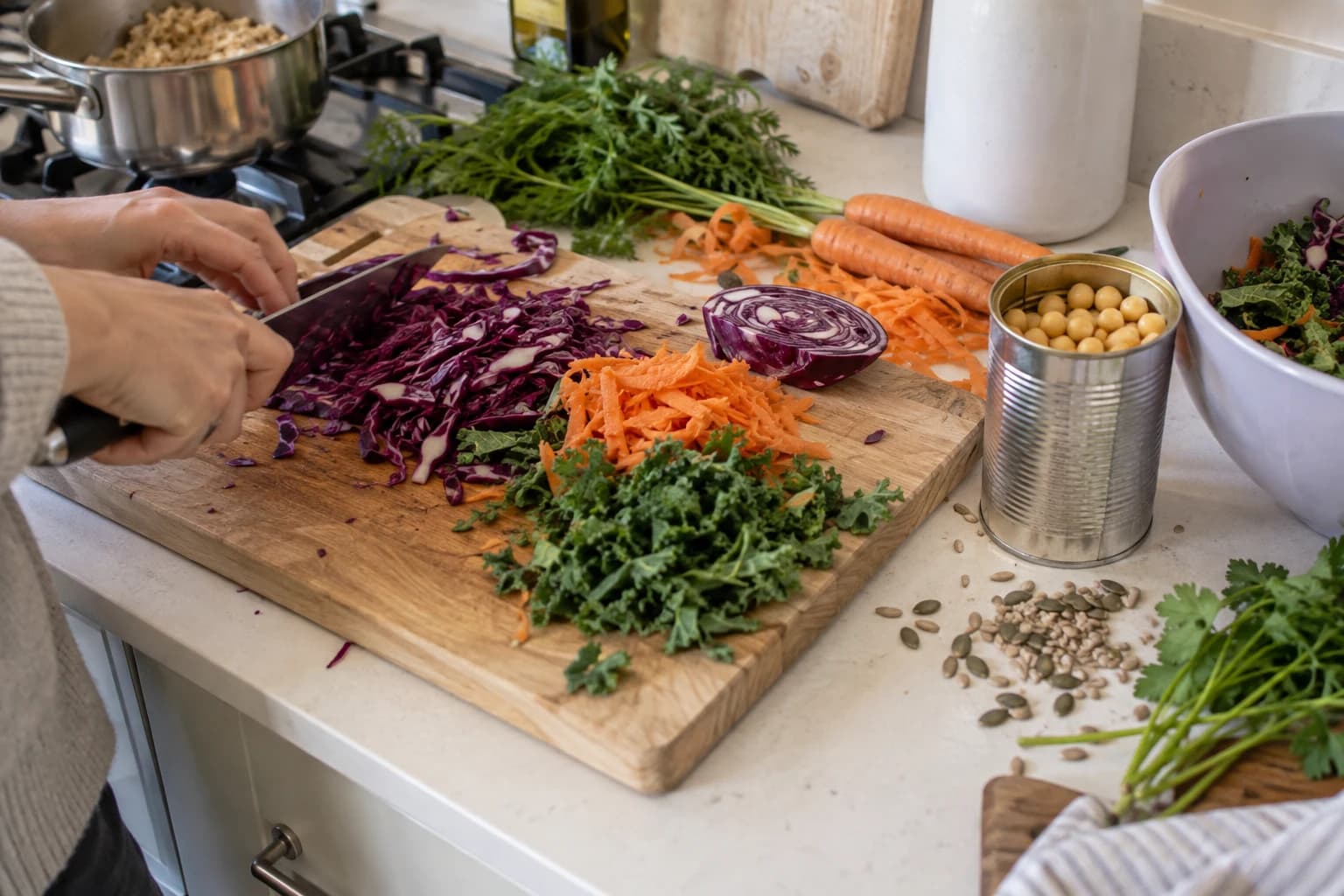
The number comes from real research, not a wellness account. Getting to it is much easier than it sounds, because a plant is anything that grew: every herb, spice, nut, seed, grain and bean counts alongside the obvious fruit and vegetables.
01 / In the kitchen
Where the number came from
The American Gut Project, published by McDonald and colleagues in mSystems in 2018, looked at thousands of people and found that those eating more than 30 different plant types a week had noticeably more diverse gut bacteria than those eating 10 or fewer. It was the variety that tracked with the difference, not the volume and not whether someone called themselves vegan.
Diversity matters because a varied gut community is a stable one. Different bacteria feed on different fibres, so a narrow diet feeds a narrow set of them. This is observational work rather than a controlled trial, so it shows a pattern rather than proving cause, but the pattern is consistent and the advice it points at is harmless. Eat more different plants.
02 / In the kitchen
Ten ways to get there
Salad greens
Mixing three or four greens instead of buying one bag is three or four plants instead of one, for the same money and no extra effort. Spinach for iron, arugula for pepper, romaine for crunch.
Smoothies
The cheapest place to stack plants, because nobody tastes the spinach. A banana, a handful of greens, frozen berries and a spoonful of seeds is five before breakfast.
Snack on raw vegetables
Carrots, celery, cucumber and cherry tomatoes cut at the start of the week get eaten. The same vegetables whole in the drawer do not.
Nuts and seeds
Each one is its own plant. A jar of mixed almonds, walnuts, pumpkin and sunflower seeds on the counter is four, sprinkled over anything.
Fruit
Frozen berry mixes are the efficient version, since a bag of three berries is three plants and it does not go off before you get to it.
Mushrooms
Not technically plants, botanically speaking, and nobody counting is going to mind. Cremini, shiitake and oyster all taste different and all behave differently in a pan. Sautéed with garlic and thyme they will carry a whole side dish.
Fermented foods
Sauerkraut, kimchi and plant-based kefir bring live bacteria in on top of the plants themselves. A forkful of sauerkraut improves almost any savoury plate, which is a claim we will defend.
Fresh herbs
The most overlooked entry on this list. Basil, cilantro, parsley, dill and mint each count, they are cheap, and a handful of any of them changes a dish more than an extra vegetable would.
Whole grains
Quinoa, brown rice, farro, barley and oats are five distinct plants. Rotating which grain goes under dinner is one decision a week for four extra entries.
Legumes
Black beans, chickpeas, lentils, white beans and split peas, each its own plant, each bringing protein and a large amount of fibre. A chili with two kinds of bean counts twice.
Read next
- 01 / IngredientsLeafy greens, and what they are actually doing
Spinach, kale, chard, collards and arugula, what each one is best at, and how to stop them dying in the crisper.
- 02 / IngredientsOur five favourite nuts, and what to do with them
Five nuts, what each is for, and the storage mistake almost everyone makes.
- 03 / In the kitchenSeven ways to throw out less food
A third of the world's food gets thrown away. Most of the fix is storage and a list.
Rather not cook tonight?