The useful version / keep this one
Our five favourite nuts, and what to do with them
Five nuts, what each is for, and the storage mistake almost everyone makes.
The BetterDay KitchenUpdated 2 min read
The short answer
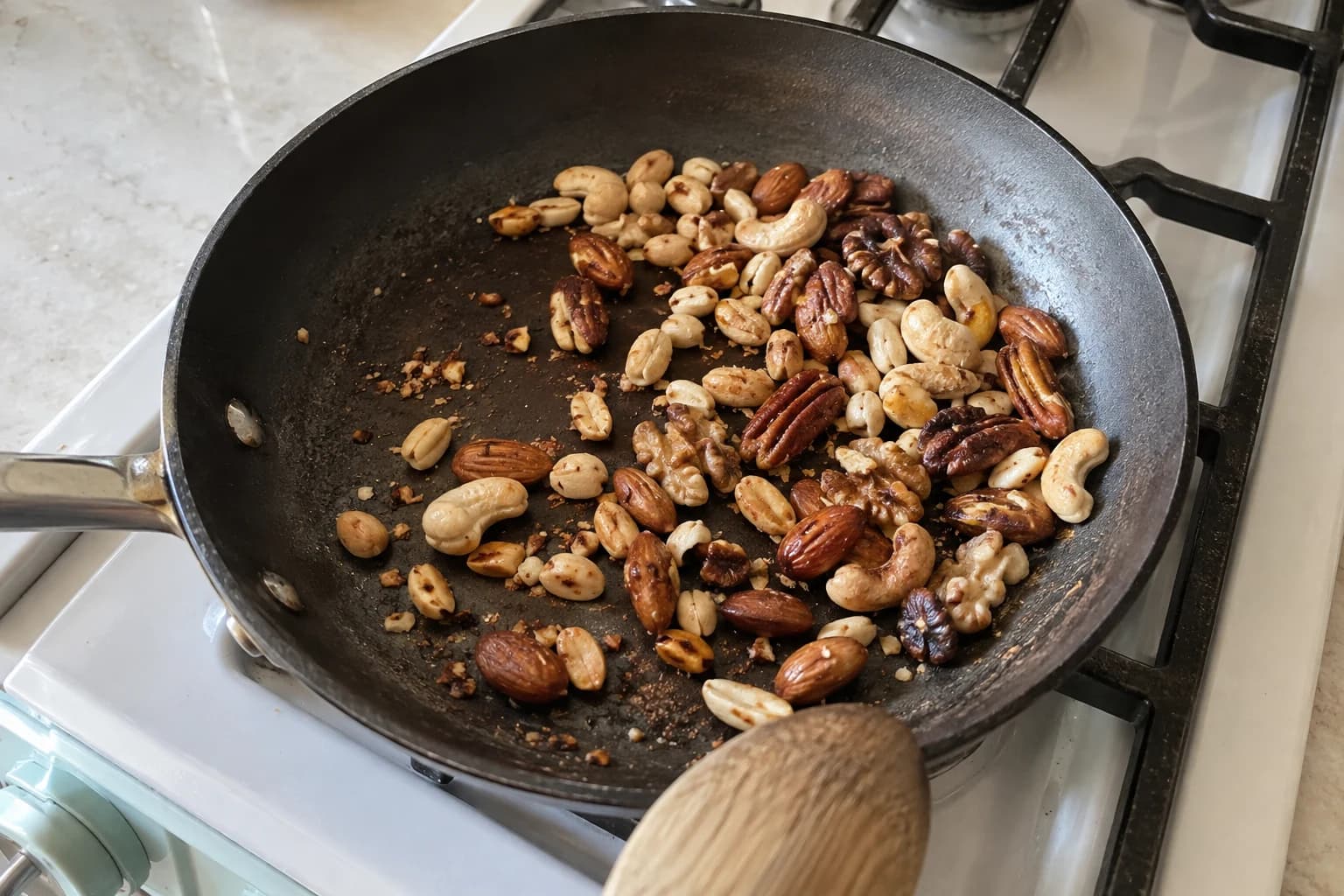
Nuts are the most useful thing in a plant-based pantry. They are snack, protein, crunch, and with a blender they turn into cream. Here are the five we buy most, and what each is genuinely for.
01 / Ingredients
Almonds
Native to the Middle East and cultivated for thousands of years. California grows the overwhelming majority of the world supply, with Spain and Italy some distance behind. Slightly sweet, properly crunchy, and a good source of protein, fat, fibre and vitamin E.
Use them: raw or toasted as a snack, blitzed into almond flour for gluten-free baking, sliced over salads and porridge, or blended into almond milk.
02 / Ingredients
Walnuts
Native to the Balkans and Central Asia, now grown widely in the United States, China and Iran. Rich and buttery with a soft bite and a slightly bitter skin, and a good source of protein, fat, fibre, magnesium and phosphorus.
Use them: in baking, chopped through cakes and breads, toasted over roasted vegetables, blitzed into a pesto, or as the base of a vegetarian mince.
03 / Ingredients
Pecans
Native to North America and a staple food for Indigenous peoples long before they were commercialised. The United States is the largest producer, mostly from the southern states. Sweet and buttery with a soft texture, carrying protein, fibre, zinc and magnesium.
Use them: candied for a cheese or charcuterie board, over oatmeal or ice cream, in pie, or crushed as a crust for baked fish or tofu.
04 / Ingredients
Cashews
Native to Brazil, now grown across India, Vietnam and Nigeria. Rich and creamy with a soft texture, and a good source of protein, fat, fibre, copper and zinc. Copper is involved in connective tissue, red blood cell production and iron absorption. Zinc is involved in immune function, wound healing and DNA synthesis.
Use them: this is the one that changes what a plant-based kitchen can do. Soaked and blended, cashews become cream, cheese, queso and frosting. Also excellent roasted in a stir fry or a curry.
05 / Ingredients
Pistachios
Native to the Middle East and cultivated for thousands of years. The United States is now comfortably the largest producer in the world, well ahead of Iran, with Turkey third. Slightly sweet with a firm bite, carrying protein, fat, fibre, potassium and phosphorus.
Use them: eaten straight from the shell, chopped over hummus or a salad, or through Middle Eastern desserts like baklava. Arguably the most addictive item on this list.
06 / Ingredients
Store them cold
This is the part most people get wrong. Nuts are mostly fat, and fat goes rancid, faster in warmth and light. A cupboard above the stove is the worst place in your kitchen for them.
Keep them in a sealed container in the fridge, or the freezer if you buy in bulk. They keep for months instead of weeks, and you can toast them straight from frozen. If a nut tastes sharp, bitter or faintly like paint, it has turned. Throw it out.
Read next
- 01 / RecipesCarrot cake with cashew icing
One bowl, no eggs, and a cashew icing that genuinely behaves like cream cheese frosting.
- 02 / IngredientsA straight guide to plant-based milks
Six milks, what each one is actually good at, and which carton to reach for in coffee, in baking and on cereal.
- 03 / RecipesBuilding a plant-based holiday board
A grazing board without the meat and cheese, built so nobody stands there looking for the meat and cheese.
Rather not cook tonight?