The useful version / keep this one
Making a food habit stick
January resolutions about food fail for a structural reason, not a willpower one.
The BetterDay KitchenUpdated 3 min read
The short answer
January is not actually different from any other month, but the fresh start it offers is useful anyway. What goes wrong is not intention. Most food resolutions are thrown like darts, with no plan underneath them, and a goal with no plan is just a wish with a deadline.
01 / In the kitchen
Make it specific enough to fail
"Eat healthier" cannot be done, checked or finished, so there is never a day you succeeded at it. "Cook dinner at home four nights a week" can be. The test of a usable goal is whether you could tell, at the end of a week, whether you did it.
The old office acronym is genuinely useful here, and it works on food:
- Specific: name the actual behaviour, not the outcome you hope it produces
- Measurable: a number you could count on a Sunday
- Attainable: sized for the week you actually have, not your best week
- Relevant: connected to something you care about, or it will not survive a bad Tuesday
- Time-bound: a date to look back from
02 / In the kitchen
Write it down where you will see it
Written goals get done more often than remembered ones for a boring reason, which is that you cannot quietly renegotiate the terms with yourself if the terms are on the fridge. The kitchen is the right place for a food goal, because that is where the decision gets made.
03 / In the kitchen
Track the behaviour, not the result
Marking the days you cooked is a better signal than anything a scale tells you, because it is the thing you actually control and it responds the same day. A row of marks is also the reason people keep going through a bad week, since the streak is visible and the results are not yet.
04 / In the kitchen
Stack it on something you already do
Habit stacking means attaching the new thing to an existing one so the old habit is the reminder. Chop vegetables while the kettle boils. Write the grocery list while the coffee brews. Prep tomorrow's lunch while the dishwasher loads. New habits fail from forgetting far more than from unwillingness, and an anchor removes the forgetting.
05 / In the kitchen
Make the good option the easy one
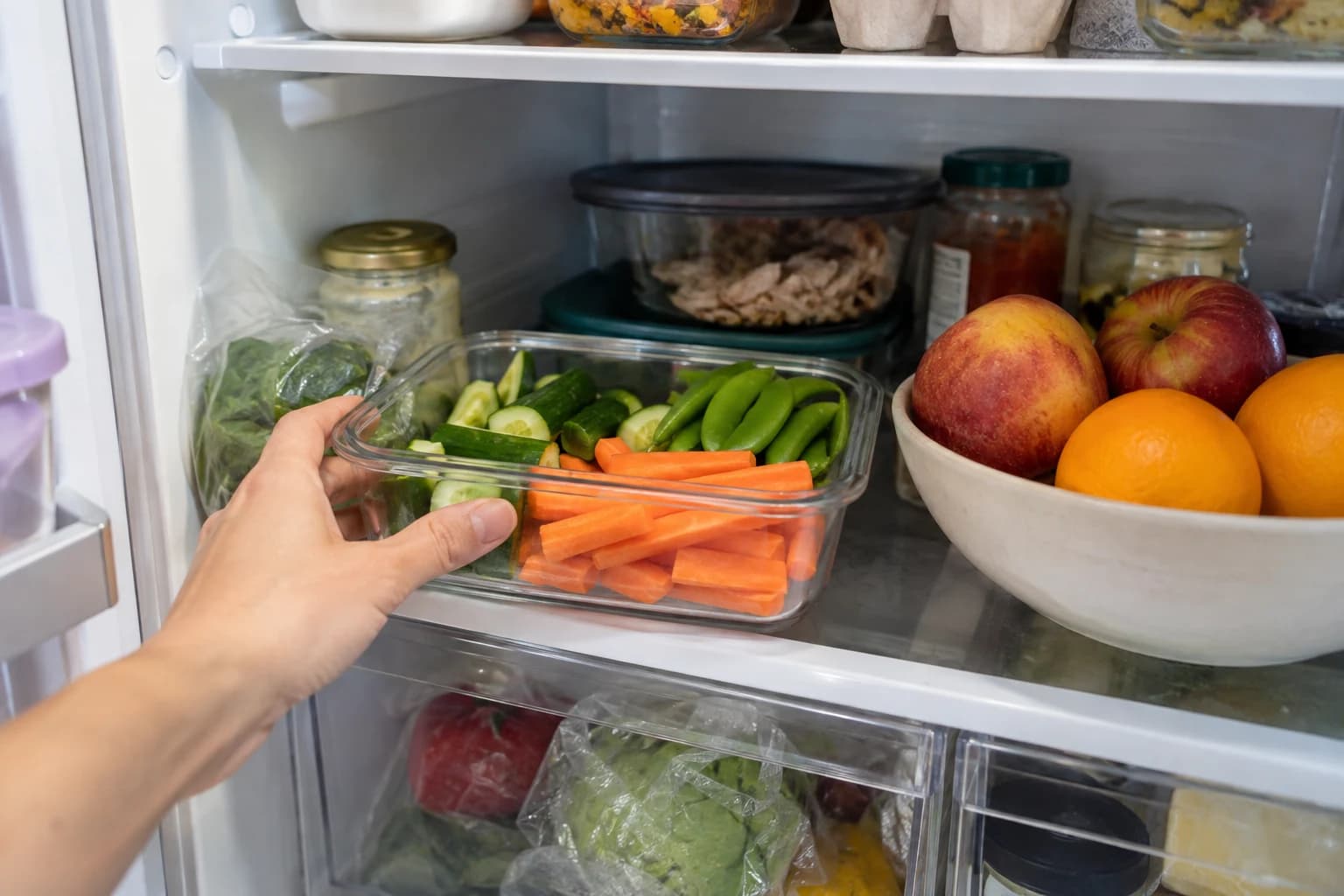
Most eating decisions get made at 6pm by someone tired, and tired people take the easiest path available. So change the paths. Cut vegetables at the weekend. Keep a jar of a sauce you like in the fridge. Freeze portions of something you can reheat. This is the part that actually decides how the week goes, and it happens on Sunday, not on Wednesday.
06 / In the kitchen
Ask for help, and be specific about it
Asking works better when the ask is concrete. "Can you handle Thursday dinners" is easier to say yes to than "can you support me with this". The same is true of anyone you are paying to help, us included.
07 / In the kitchen
Missing a day is not the end
Almost nobody quits because of one missed day. People quit because one missed day gets treated as evidence that the whole thing has failed. The rule that works is never miss twice in a row, which keeps a bad Tuesday from becoming a bad February.
Read next
- 01 / In the kitchenSeven ways to throw out less food
A third of the world's food gets thrown away. Most of the fix is storage and a list.
- 02 / In the kitchenHow to eat 30 plants a week without thinking about it
Thirty sounds like a lot until you find out that herbs, spices, nuts and grains all count.
- 03 / In the kitchenGoing plant-based in a house that is not
The hard part is rarely the food. It is cooking two dinners and defending your choice over both of them.
Rather not cook tonight?