The useful version / keep this one
Going plant-based in a house that is not
The hard part is rarely the food. It is cooking two dinners and defending your choice over both of them.
The BetterDay KitchenUpdated 2 min read
The short answer
The world around you does not automatically rearrange itself when you change how you eat. If your partner or your kids are still eating meat, the change gets harder, and a habit that is hard usually does not stick. Most of what makes it easier is logistics rather than persuasion.
01 / In the kitchen
Know your own reason
People go plant-based for animals, for the environment, for their health, for their cholesterol numbers, or because they feel better. Any of those is a complete answer. Knowing which one is yours matters because you will be asked, often at dinner, sometimes by someone being difficult about it, and a clear answer ends the conversation faster than a defensive one.
02 / In the kitchen
Say it out loud, early
Tell your partner why it matters to you, that you are not asking them to do the same, and that you would like the choice respected. Having that conversation before you start pouring cashew milk on your cereal turns a source of friction into a known fact about the household.
03 / In the kitchen
Watch something together
A documentary does the explaining for you in two hours, from the couch, without it being an argument. Three that land with people who are not already convinced:
- The Game Changers, for anyone who thinks meat is a requirement for athletic performance
- Forks Over Knives, for the food and health angle
- Cowspiracy, for the environmental case
04 / In the kitchen
Cook one dinner, not two
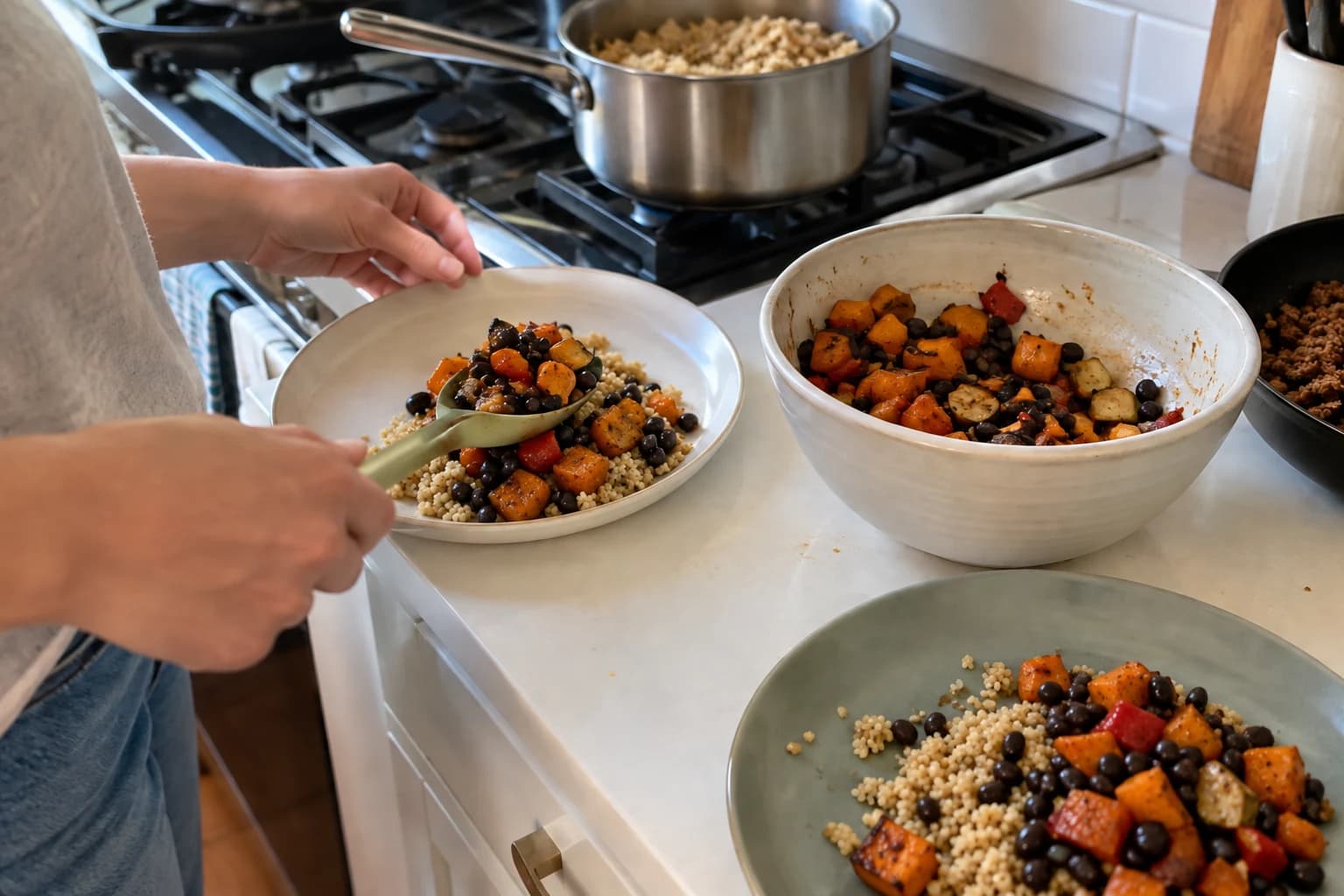
This is where split households actually break down, and the fix is to build meals where the protein is the only thing that differs. Spaghetti night runs the same sauce, with Italian spiced chickpeas or a lentil crumble on one side of the pan and meatballs on the other. A grill night puts plant-based sausages on next to whatever else is going on.
The reason this works is that a shared base means one pot of sauce, one pan of rice, one tray of vegetables, and a two-minute divergence at the end. Cooking two entire meals every night is what burns people out by week three.
05 / In the kitchen
Keep a short list of things that always work
Three or four plant-based meals that your household genuinely likes will carry you further than a folder of recipes you have never made. Mushroom stroganoff and a lentil bolognese both read as comfort food rather than as substitutions, which is most of the battle. Keep a batch of something high-protein in the freezer for the nights when nobody wants to cook.
06 / In the kitchen
Take one or two nights a week
Instead of asking the house to change, ask for Tuesday. Buffalo cauliflower wings, which are florets tossed in a thin batter, baked at 425F until crisp, then coated in hot sauce and baked another ten minutes, tend to convert people who were not planning to be converted.
Read next
- 01 / IngredientsWhat are soy curls, and why we keep a bag going
One ingredient. Whole soybeans. Not a fake meat, and better than most of them.
- 02 / RecipesRoasted soy curls with garlic and oregano
Marinate, roast, done. The chewiest, most useful plant protein in your cupboard.
- 03 / In the kitchenHow to eat 30 plants a week without thinking about it
Thirty sounds like a lot until you find out that herbs, spices, nuts and grains all count.
Rather not cook tonight?