The useful version / keep this one
Fennel, the vegetable people walk past
It sits in the produce aisle looking like a confused onion. It is one of the best vegetables there.
The BetterDay KitchenUpdated 2 min read
The short answer
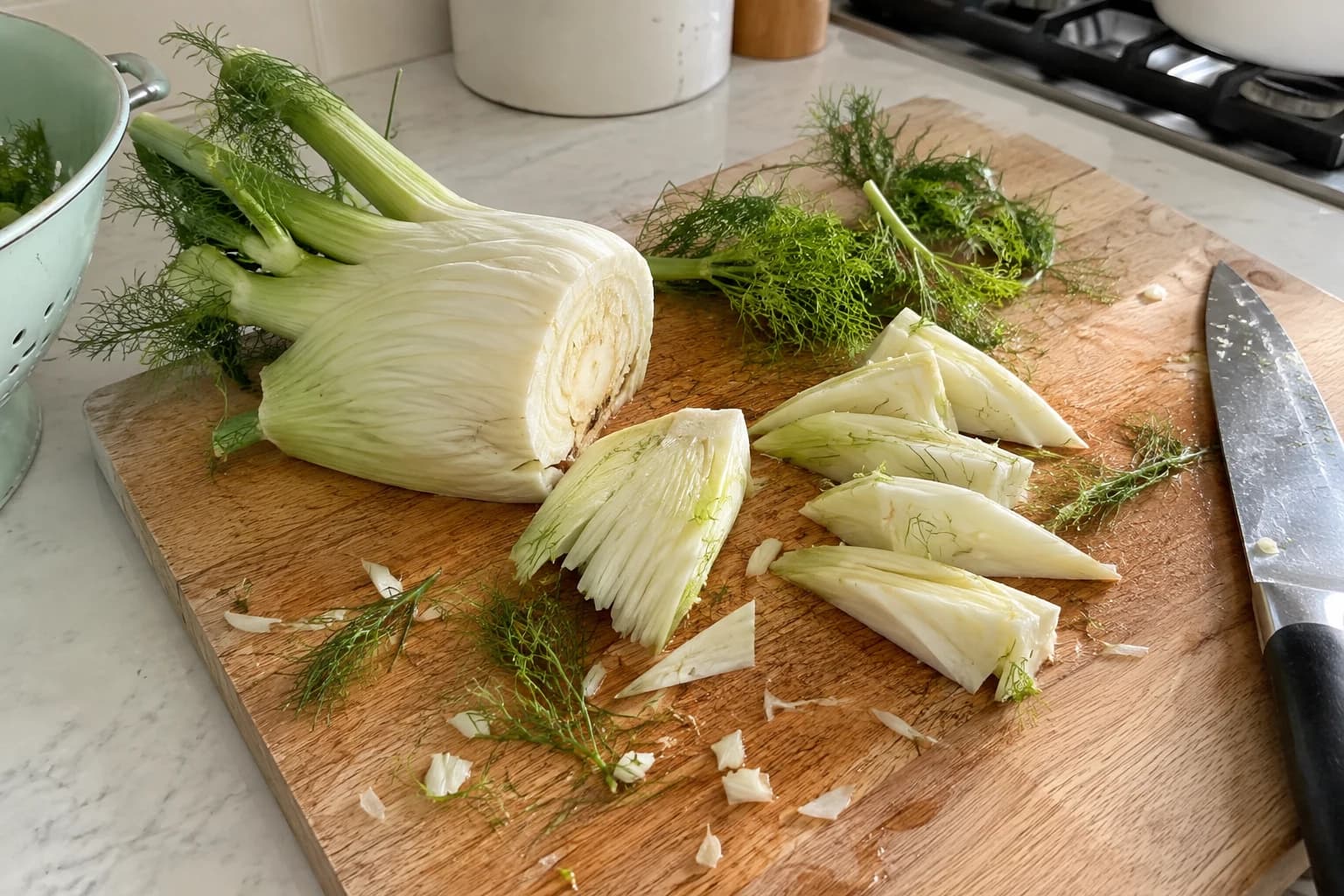
Fennel gets skipped because people are not sure what it is or what to do with it. It is in the carrot family, it is native to the Mediterranean, and every part of it is edible: bulb, stalk, frond and seed.
01 / Ingredients
What is in it
Fennel (Foeniculum vulgare) is low in calories and carries a useful spread of nutrients rather than a headline amount of any one thing.
- Vitamin C, which works as an antioxidant and supports normal immune function
- Potassium, which the body uses for nerve signalling, muscle control and blood pressure regulation
- Folate, a B vitamin involved in cell division and DNA synthesis, and particularly important during pregnancy
- Calcium, in modest amounts, contributing to bone and muscle function
- Dietary fibre, which is the part most people are short on
02 / Ingredients
Anethole, the thing that makes it taste like that
The licorice note in fennel comes from anethole, and scientists have been poking at that compound in the lab for years. It acts as an antioxidant and an anti-inflammatory, and it switches on the body's own antioxidant enzymes. Most of that work is done in a dish at doses far bigger than a bulb of fennel, so treat it as a good reason researchers keep coming back to it rather than a promise about your dinner.
Fennel also contains flavonoids including quercetin and rutin, which are the same family of antioxidant compounds you find across a lot of the produce aisle.
03 / Ingredients
The digestion thing is old and well earned
Fennel seed has been chewed after meals for centuries across the Mediterranean and South Asia, and it is described in herbal traditions as a carminative, which is the old word for something that settles gas and bloating. The fibre in the bulb does a separate and less romantic job, which is keeping things regular and feeding the bacteria in your gut.
04 / Ingredients
Five ways to actually use it
- Raw: shave it thin on a mandoline into a salad with orange segments and olive oil. Crunchy and bright.
- Roasted: wedges with oil, garlic and thyme at 400F until the edges caramelise. This is the one that converts people.
- Grilled: thick slices until tender and charred, good next to fish or tofu.
- In soup: sweat it with onion as the base of almost any soup, the way you would celery.
- As tea: steep the seeds in hot water. The traditional after-dinner move.
Read next
- 01 / RecipesRoasted fennel with balsamic glaze and toasted walnuts
Roasting turns fennel from sharp and licorice-y into sweet and almost caramel. Different vegetable entirely.
- 02 / In the kitchenHow to eat 30 plants a week without thinking about it
Thirty sounds like a lot until you find out that herbs, spices, nuts and grains all count.
- 03 / IngredientsLeafy greens, and what they are actually doing
Spinach, kale, chard, collards and arugula, what each one is best at, and how to stop them dying in the crisper.
Rather not cook tonight?